

The Office Relocation System
A proven, structured approach to planning successful office relocations
Most Office Relocations Feel Overwhelming
Not because they’re impossible, but because there’s no clear structure guiding the process.
Too many decisions
Unclear sequencing
Missed steps
Last-minute pressure
A Proven System, Not Guesswork
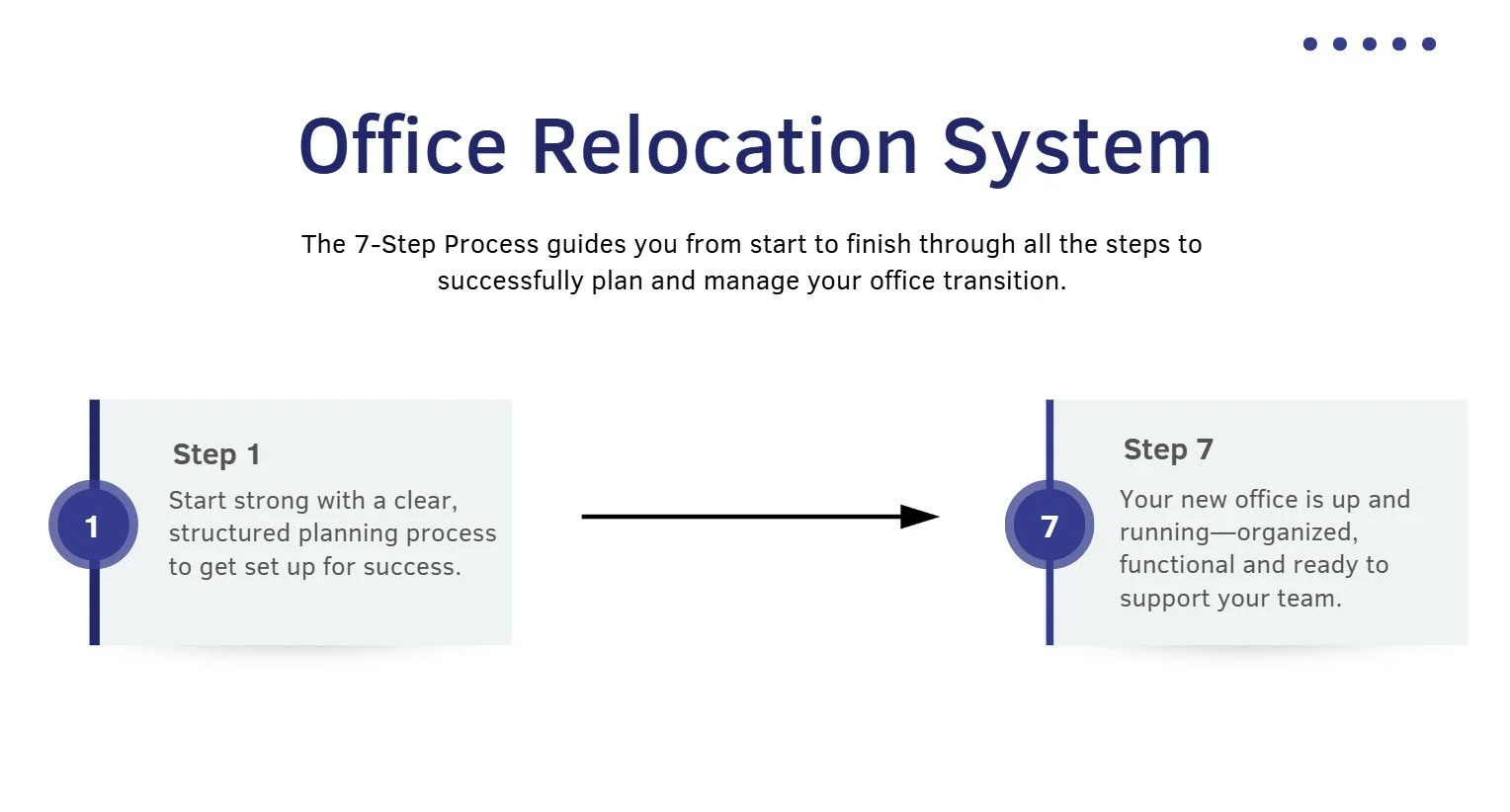
The Office Relocation System provides a structured approach to planning your move from start to finish.
A Structured Framework Built from Real-World Experience
This system is built on a complete, step-by-step planning methodology developed from over 20 years of managing office relocations.
It’s designed to:
Guide you through each stage of the process
Ensure nothing critical is missed
Keep decisions organized and on track
Reduce risk, stress and costly mistakes
Key Components:
An easy, 7-step process to follow from the initial planning to settling in at your new office.
Guidance on how to effectively plan your relocation, select the right mover, determine move sequencing, create a move labeling system, prepare for move day and successfully set up your new office.
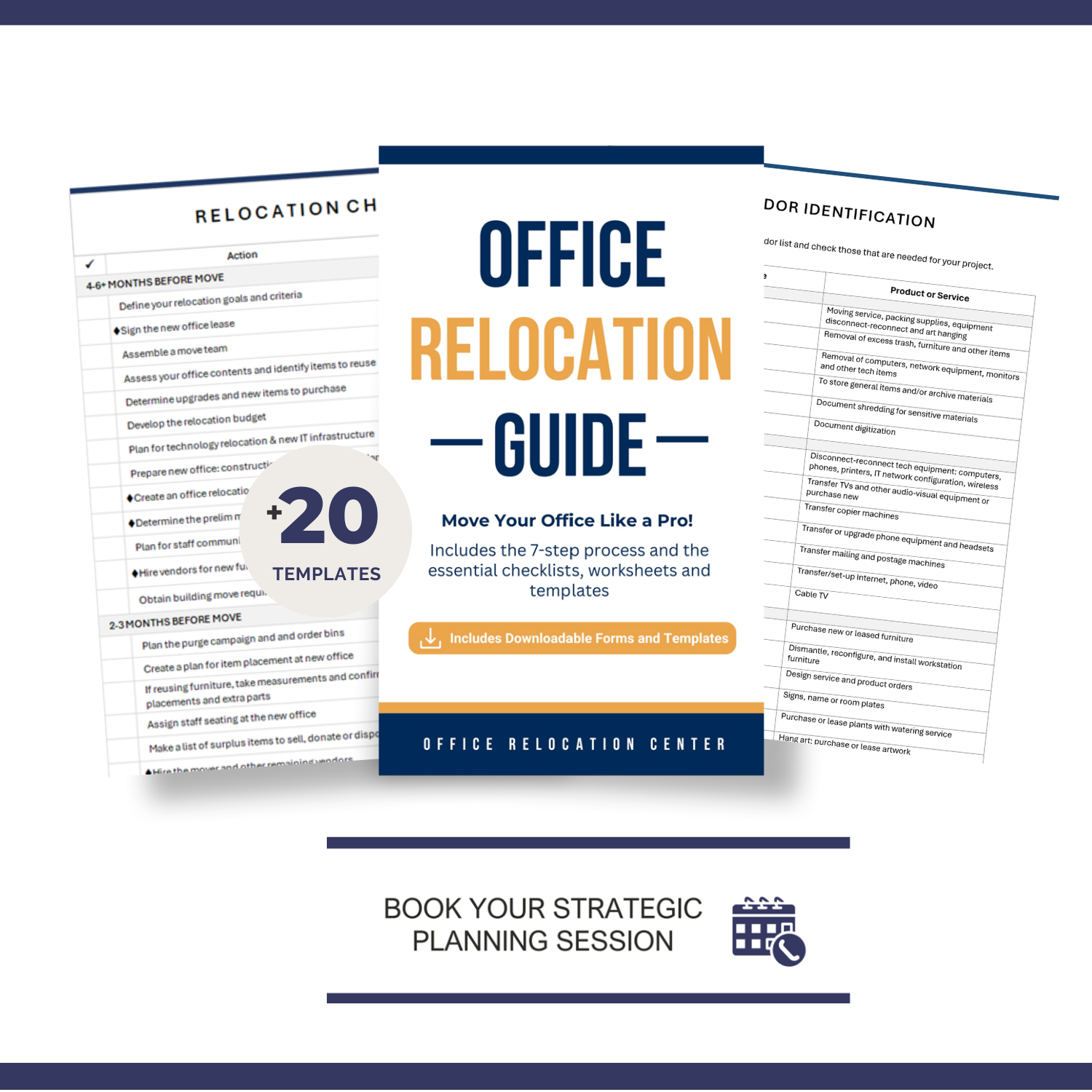
10-20+ relocation templates and tools that let you shortcut the process and not miss any details. Includes: Office Relocation Budget Template, Relocation Timeline and Schedule Checklist, Move Notification Planner, Move Readiness Checklist, Staff Day 1 Planner.
Live expert guidance to get your move set up correctly and organized for success and work through any issues that arise during the process.
Why This System Works
Based on real-world relocation experience
Built for the practical needs of business relocations
Combines structure, tools and expert insight
Helps set the foundation for a better workplace
Flexible for relocations, downsizing and expansion
What’s Included
A complete relocation planning guide
Practical templates and tools
A structured system to follow
Optional expert guidance
Start with the System. Add Support if Needed.
Use the toolkit
Add guidance
Choose your level of support
Everything You Need. All in One Place.
A clear, structured way to plan your office relocation—with the tools, guidance and the support you need to get it right from the start. We make the process easy and hassle-free. Check out our plans.

7-STEP RELOCATION PROCESS
A clear, structured path that guides you through every stage of planning—what to do, when to do it and how to move forward with confidence.

PLANNING TEMPLATES & TOOLS
Ready-to-use resources to help you build your timeline, manage your budget, and stay organized throughout the planning process.

1:1 PLANNING SUPPORT
Work directly with an office relocation specialist to plan your project, make key decisions and move forward with clarity and confidence.
How We Fit In - Your Relocation Planning Partner
We provide the tools, framework and expert guidance to help you plan and manage your office move with clarity and confidence.
With a proven planning system and professional templates, you can stay organized, make informed decisions and keep the process on track.
We help you:
Understand what needs to happen and when
Clarify scope, priorities and key decisions
Build a realistic relocation timeline with targeted milestones
Identify risks before they become problems
The result is a relocation that is structured, intentional and manageable, and not overwhelming.

Ready to Plan Your Move with Confidence?
You’ve seen how the system works. Now it’s time to put it into action. Start with the Office Relocation Toolkit, then add support if and where you need it.